
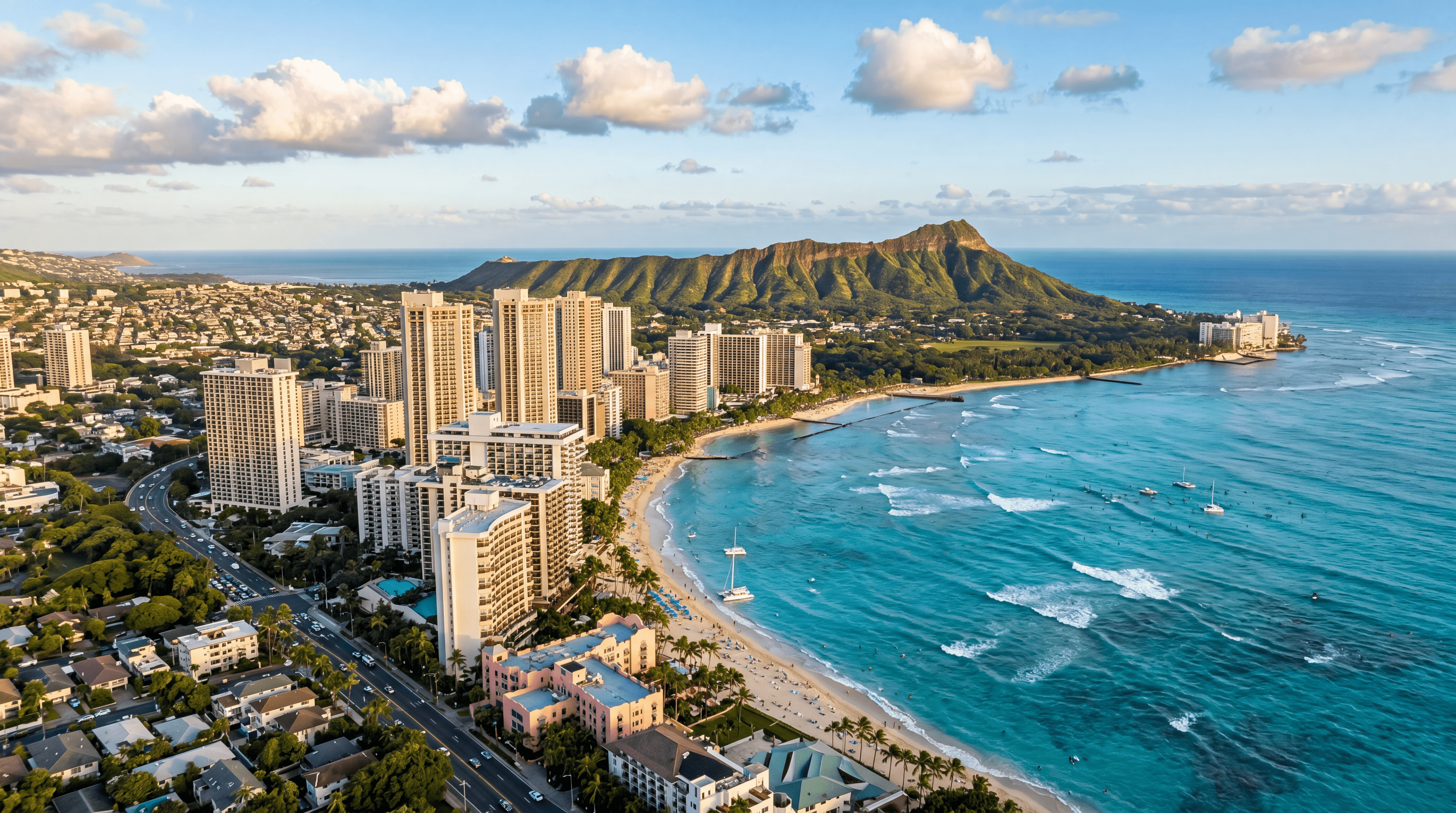
Honolulu real estate is not just an island lifestyle story. It is a high-value, supply-constrained, ocean-adjacent, military, tourism, relocation, luxury, investor, and long-term homeowner market shaped by land scarcity, insurance, coastal conditions, property taxes, association rules, ownership structure, neighborhood identity, and the realities of buying on Oʻahu.
Buyers may be drawn to Honolulu because of climate, beaches, culture, military and government presence, international access, resort and hospitality demand, healthcare, education, and the rare combination of city life and island geography. Sellers may be managing a valuable asset in one of the most recognizable real estate markets in the world. Homeowners may be watching assessed value, exemptions, property classification, tax bills, and comparable sales as local conditions change.
Changing Crowns® approaches Honolulu real estate through a founder-led, technology-minded referral model designed to help serious clients organize their goals before connecting with a qualified local real estate professional.
Why Honolulu Real Estate Requires a Clear Strategy
Honolulu is not a conventional mainland housing market. It is shaped by limited land, island logistics, tourism, local resident demand, military relocation, international buyers, high carrying costs, and the practical realities of owning property in a coastal environment.
A Waikīkī condo, a Kakaʻako luxury residence, a single-family home in Mānoa, a property near Diamond Head, a Kalihi investment property, a Hawaiʻi Kai waterfront home, and an older Oʻahu residence can all involve different costs, review points, and buyer expectations.
For buyers, strategy means reviewing more than the view or location. It means understanding total monthly cost, property taxes, insurance, maintenance, leasehold versus fee simple status where applicable, association documents, flood or coastal exposure, comparable sales, and long-term resale appeal.
For sellers, strategy means understanding how the property competes now. Honolulu has global name recognition, but pricing, condition, building financials, land tenure, neighborhood positioning, and buyer fit still matter.
What Buyers Should Review Before Buying in Honolulu
Honolulu buyers should prepare before relying only on lifestyle appeal, beach proximity, or broad island demand. A property can look exceptional and still require careful review of costs, rules, taxes, condition, insurance, association obligations, and long-term fit.
Before entering the Honolulu market seriously, buyers should review:
- Total ownership cost: mortgage payment, property taxes, insurance, utilities, maintenance, association fees, reserves, and possible repairs.
- Property type: condos, single-family homes, luxury residences, older homes, investment properties, and leasehold or fee simple interests may require different review points.
- Insurance and coastal questions: flood exposure, hurricane risk, building master policies, reserves, maintenance, and coastal conditions can affect affordability.
- Neighborhood fit: Honolulu neighborhoods can differ by commute, schools, density, view corridors, parking, walkability, and lifestyle.
- Comparable sales: recent closed sales are more useful than broad Oʻahu headlines or active listing prices alone.
- Long-term use: primary residence, military relocation, investment, retirement, second home, or future resale strategy.
Honolulu rewards buyers who combine lifestyle goals with careful financial and property-specific review. The goal is not to make the process feel heavy. The goal is to avoid surprises after the emotional part of the decision has already taken over.
What Sellers Should Think About Before Listing
Honolulu sellers should not assume that island scarcity automatically creates the strongest outcome. A property still needs to be positioned for the buyer most likely to value it.
Sellers should think carefully about:
- Recent comparable sales: relevant closed sales usually provide stronger pricing context than broad island assumptions.
- Buyer profile: local buyer, military buyer, relocating professional, investor, luxury buyer, second-home buyer, or international client.
- Property condition: roof, windows, plumbing, electrical, ocean-air exposure, drainage, building systems, reserves, and maintenance history can affect buyer confidence.
- Ownership structure: fee simple, leasehold, condo association documents, house rules, reserves, and assessments may shape marketability.
- Marketing clarity: strong listing strategy should explain practical value, not only lifestyle appeal.
The strongest Honolulu seller strategy starts before the property goes public. Clear positioning helps qualified buyers understand why the property matters now.
Why Professional Fit Matters in Honolulu
Honolulu is a detail-sensitive market because property type, land tenure, association rules, coastal exposure, insurance, taxes, military relocation, local ownership costs, and island logistics can change the decision. The right local professional should understand the property, the area, the buyer or seller profile, and the communication style needed for the situation.
Changing Crowns® supports real estate referrals with a national and international mindset. The focus is not passing along a random name. The focus is helping serious clients think through their needs and connect with a qualified local professional who fits the property, location, timeline, and goal.
This matters for buyers relocating to Honolulu, sellers moving to the mainland, investors comparing island property with mainland markets, homeowners reviewing next steps, and clients who need support across more than one city or country.
Honolulu Is Local, National, and International
Honolulu is a local housing market, a military relocation market, a national second-home and retirement market, and an international real estate gateway. Buyers may come from within Hawaiʻi, the continental United States, Japan, Korea, Canada, Australia, and other global markets. Some are relocating for work. Some are military families. Some are investors. Some are lifestyle buyers. Some are local residents navigating affordability and inventory constraints.
That movement creates real referral opportunities. A Honolulu buyer may also need to sell on the mainland. A Honolulu seller may be moving to Boston, Miami, Austin, Seattle, San Diego, Los Angeles, Vancouver, Tokyo, Seoul, or another market. A relocating client may need a local professional who understands both the island market and the pace of the move.
Changing Crowns® is built for that kind of modern real estate path: local enough to respect market details, broad enough to understand relocation, and technical enough to organize decisions around clear information.
Property Taxes and Ownership Costs Should Be Reviewed Early
Honolulu buyers and homeowners should review property taxes and ownership costs early. Real property taxes may be affected by property classification, assessed value, exemptions, net taxable value, property use, and the applicable tax rate.
A buyer or homeowner should not assume the list price explains the full ownership picture. The more useful question is whether the total cost makes sense when taxes, insurance, association fees, reserves, utilities, maintenance, coastal exposure, land tenure, and long-term use are reviewed together.
Homeowners should understand the difference between:
- Purchase price: what a buyer paid for the property.
- Market context: recent activity and comparable sales that help explain local demand.
- Assessed value: a value used within the real property tax process.
- Net taxable value: assessed value after applicable exemptions or adjustments.
- Property classification: the category that affects the applicable tax rate.
- Total ownership cost: the practical monthly and annual cost of owning the property.
This is not about turning every real estate decision into a tax project. It is about helping buyers, sellers, and homeowners understand the numbers before they make a high-stakes decision.
Why Median Versus Average Pricing Matters
Honolulu has a wide range of property types, locations, views, building ages, ownership structures, and price points. One luxury oceanfront sale, one leasehold sale, one distressed transaction, one high-rise condo closing, or one single-family home with rare land can affect averages when the comparison set is small.
The median shows the middle of a data set. The average adds all sale prices together and divides by the number of sales. Both can be useful, but they are not the same.
That matters because Honolulu comparisons can become misleading when the data mixes different neighborhoods, condo buildings, land tenure, ocean views, fee structures, renovation levels, association reserves, and property types. A stronger comparison is narrow enough to support a real decision.
How Falcon Nest Check™ Connects to Homeowner Readiness
Changing Crowns® is building Falcon Nest Check™, a future property tax appeal readiness tool designed to help homeowners organize assessment information, comparable sales, tax impact, median versus average differences, outlier warnings, and appeal-prep materials.
Falcon Nest Check™ is launching Massachusetts-first, but the larger homeowner-readiness idea applies broadly: homeowners benefit when they organize information clearly, understand their numbers, compare carefully, and know what questions to ask before taking the next step.
Falcon Nest Check™ is intended to be educational and organizational. It is not an appraisal tool, legal advice, tax advice, financial advice, assessment advice, flood-risk advice, leasehold advice, or a tool that determines fair cash value. Its purpose is to help homeowners organize information for further review with public records, local offices, and qualified professionals as needed.
How Changing Crowns® Approaches Real Estate Guidance
Changing Crowns® is founder-led by Amy Choma, a senior full-stack software engineer and licensed real estate agent. The real estate side of the company combines strategic thinking, technology awareness, referral coordination, and practical client preparation.
The goal is not to overwhelm people with jargon. The goal is to help serious clients get organized before they move forward. That may mean clarifying a buyer’s search, helping a seller think through next-market relocation, connecting a client with a local professional, or building tools that help homeowners understand their information more clearly.
For Honolulu real estate, that means respecting the island market’s complexity while staying grounded in the practical numbers, property details, and ownership costs that shape real decisions.
Quick Summary
Honolulu real estate requires preparation because the city combines island land scarcity, global lifestyle demand, military and international relocation, property tax considerations, ownership-structure questions, insurance and coastal issues, neighborhood-specific value, and changing market conditions. Buyers should review total ownership costs, property type, neighborhood fit, association rules, insurance, taxes, comparable sales, and long-term use. Sellers should focus on pricing clarity, buyer fit, property condition, ownership structure, current-market positioning, and next-step planning. Homeowners should stay aware of assessed value, net taxable value, exemptions, property classification, median versus average differences, and ownership costs.
Changing Crowns® helps serious buyers, sellers, relocating clients, investors, and homeowners approach Honolulu real estate with clearer information, better questions, and stronger professional-fit referrals.
Important Real Estate Note
This article is for general educational and informational purposes only. Real estate conditions vary by property, neighborhood, island, price point, financing, timing, tax classification, exemptions, assessment rules, insurance, flood or coastal exposure, association rules, leasehold terms, zoning, building condition, and individual goals. Buyers, sellers, investors, and homeowners should independently verify property details, taxes, assessments, comparable sales, zoning, insurance requirements, flood information, association documents, lease terms, financing terms, legal obligations, and market data with qualified professionals and official sources as needed. This article does not provide legal, tax, financial, appraisal, assessment, insurance, flood-risk, leasehold, or real estate valuation advice and does not determine fair cash value.