
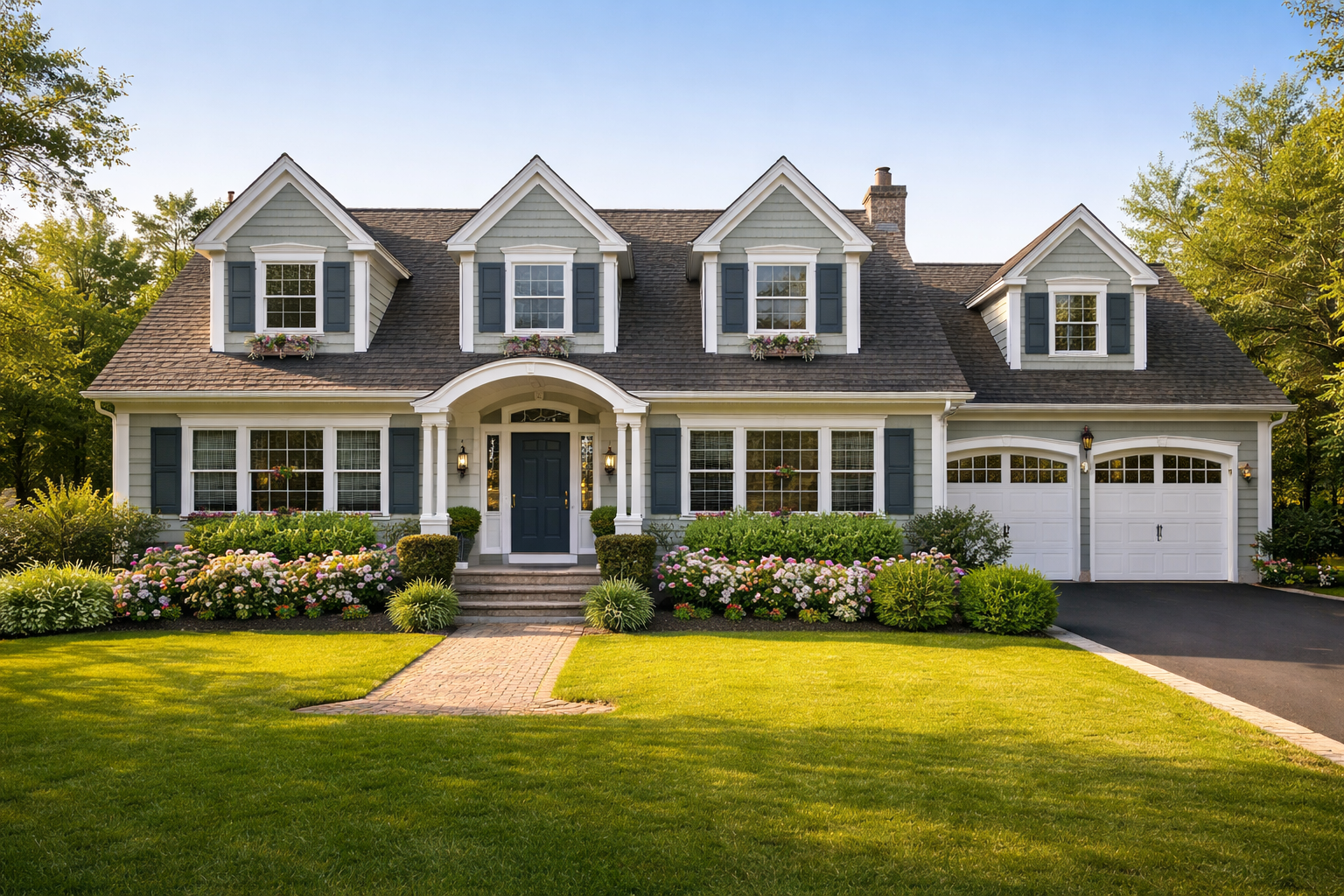
Beverly, Massachusetts — a coastal gem located in Essex County — has emerged as one of the most resilient and promising real estate markets in 2025. Known for its seaside charm, commuter accessibility, and vibrant downtown, Beverly strikes a rare balance between community feel and long-term investment potential. In a year where many suburban markets have cooled or plateaued, Beverly’s home values continue to show reliable appreciation — making it a top choice for buyers who want both lifestyle and return.
While some North Shore towns have experienced price adjustments in early 2025, Beverly’s housing demand has remained steady, driven by an influx of buyers seeking walkable communities with strong civic infrastructure. With five distinct neighborhoods, a bustling arts district, and an MBTA commuter rail that provides quick access to Boston, Beverly checks a wide range of boxes for today’s buyers and investors.
Home Price Trends and 2025 Market Outlook
According to recent MLS data, the median single-family home price in Beverly reached $728,000 in Q2 2025 — up 4.7% year-over-year. While price growth has moderated compared to the double-digit spikes of 2021–2022, Beverly’s gains reflect the town’s durability. Properties in desirable neighborhoods like Beverly Cove, Montserrat, and Prospect Hill are still commanding premium offers, especially when walkability or water views are in play.
Inventory remains competitive. Homes priced between $650,000 and $850,000 are averaging just 21 days on market, with many listings attracting multiple bids. Renovated colonials, coastal cottages, and townhomes near Cabot Street are in particularly high demand, especially among downsizers and dual-income professionals leaving the city.
Neighborhood Highlights and Buyer Preferences
Beverly’s appeal lies in its diversity — both in housing stock and neighborhood character. Beverly Cove, with its scenic coastline and historic homes, remains one of the most desirable areas for high-end buyers. Meanwhile, neighborhoods like Ryal Side and Centerville are seeing renewed attention in 2025 due to their relative affordability and family-friendly layouts.
Downtown Beverly continues to benefit from transit-oriented development. The Cabot Street corridor now features mixed-use buildings with modern apartment units above local shops and restaurants. This urban-suburban hybrid appeals to buyers who want cultural amenities, short commutes, and lower maintenance living. The city’s walkability score of 72 — among the highest on the North Shore — makes it especially attractive to professionals working hybrid schedules in Greater Boston.
The addition of bike lanes along Elliott Street and new pedestrian improvements near Dane Street Beach have enhanced local mobility, contributing to Beverly’s identity as a 15-minute city. Buyers in 2025 are prioritizing towns with built-in convenience, and Beverly delivers that in a coastal New England setting.
School System and Family Appeal
Education remains a major draw for families relocating to Beverly. The public school system continues to receive strong state evaluations, and Beverly High School was named one of the top 50 in Massachusetts by U.S. News & World Report in 2024. The STEM-focused Innovation Pathways Program launched last year has already placed students in internships at local biotech firms and environmental research labs.
Beverly also supports early education through robust preschool options and youth enrichment programming at the Beverly Recreation Department. Families cite the town’s blend of green space, walkable neighborhoods, and strong civic investment as reasons they chose Beverly over nearby alternatives like Salem or Peabody.
Coastal Access and Lifestyle Amenities
One of Beverly’s greatest assets is its natural beauty. With over five public beaches, multiple marinas, and scenic drives along Lothrop Street, the town offers coastal living without the seasonal volatility found in more tourist-heavy areas. Lynch Park, in particular, has become a local favorite — featuring rose gardens, kayak rentals, and a robust summer concert series that brings in families from all over Essex County.
For active residents, the Beverly-Salem Bridge connects walkers and bikers to neighboring attractions, while the improved Bass River pathways support safe year-round activity. In 2024, Beverly completed the installation of 3.2 miles of new coastal resilience fencing and dune restoration along West Beach — part of a broader climate adaptation plan funded by a $1.6M state grant.
Residents benefit from more than just natural beauty. The town’s restaurant scene continues to thrive, with new additions like farm-to-table bistros near Hale Farm and a popular seafood-focused gastropub opening near the Beverly Depot. Cultural institutions like the Cabot Theatre and Montserrat College of Art bring energy to the community year-round, with events ranging from indie film festivals to gallery crawls.
Transportation and Commuter Access
Beverly is among the most commuter-friendly towns on the North Shore, with five MBTA commuter rail stops — the most of any town outside Boston. Trains run frequently to North Station, with average travel times of under 40 minutes. This rail connectivity, combined with proximity to Route 128 and Route 1A, gives residents multiple commuting options regardless of traffic conditions.
In 2025, the MBTA announced plans to electrify parts of the Newburyport/Rockport Line, with Beverly expected to benefit from quieter trains and faster peak service by 2026. Local officials have also secured funds to upgrade Beverly Depot’s accessibility and improve the adjacent parking garage — a key win for daily riders.
Housing Pipeline and Smart Development
While Beverly values its historic charm, the town has taken steps to responsibly expand housing stock in response to population growth and affordability concerns. In 2025, the City Council approved a 48-unit mixed-use development along Rantoul Street, aimed at increasing rental inventory for young professionals. The inclusionary zoning policy requires 20% of these units to be affordable — a measure that aligns with Beverly’s efforts to support economic diversity.
Smaller-scale infill projects are also underway, including the adaptive reuse of former industrial buildings into loft-style condominiums. The 2025 Housing Needs Assessment, commissioned by the city, identified underutilized parcels near the Beverly Depot and Bass River area as strategic targets for future residential expansion. These zones are now subject to expedited permitting for energy-efficient multifamily construction — a nod to both housing and climate goals.
Civic Leadership and Resident Engagement
Beverly’s city government maintains a strong relationship with its residents, aided by high transparency and proactive communication. Monthly city council meetings are livestreamed, and a new participatory budgeting process has allocated over $750,000 in resident-directed investments since 2023. Popular community-voted projects include sidewalk repairs, expanded splash pads, and increased library hours.
Voter turnout in the most recent municipal election exceeded 48% — one of the highest on the North Shore. Local leaders credit this engagement to a combination of digital outreach, neighborhood associations, and forums hosted at local schools and churches. In 2025, Mayor Mike Cahill’s administration also launched a pilot “community resilience liaison” program to support neighborhoods affected by climate events and utility outages.
Public Safety and Health Infrastructure
Beverly Police and Fire Departments continue to set the standard for suburban safety. Response times remain under six minutes, and the city was recently awarded a grant to expand its community policing efforts. The department partners with mental health professionals on crisis response and runs outreach sessions in local schools to build trust with youth populations.
Healthcare access in Beverly is anchored by Beverly Hospital, a part of Beth Israel Lahey Health. In 2024, the hospital opened a new outpatient behavioral health wing and partnered with Montserrat College of Art to provide student health services. Public health data from the town’s 2025 Wellness Dashboard shows above-average vaccination rates and declining rates of smoking and diabetes relative to state averages.
Long-Term Market Outlook
As 2025 progresses, Beverly stands out not just for its aesthetics or location, but for its economic fundamentals. The town continues to attract buyers with long-term horizons — professionals investing in walkable neighborhoods, families prioritizing schools, and retirees trading city bustle for coastal calm. Real estate agents report that over 60% of recent buyers plan to hold their properties for 10+ years, citing Beverly’s strong community anchors and relatively stable tax environment.
Experts at the Massachusetts Association of Realtors predict that Beverly will outperform regional averages over the next five years. Its combination of transit access, livability, and shoreline — plus a low commercial vacancy rate under 4% — helps the town hedge against volatility affecting more single-industry communities.
Finally, Beverly’s cultural renaissance has proven more than aesthetic. Public art installations, pop-up galleries, and open streets festivals contribute to a distinct sense of place — something homebuyers increasingly crave in an era of remote work and urban fatigue.
Conclusion
In short, Beverly offers the rare blend of coastal lifestyle and upward market trajectory. It remains deeply rooted in tradition while embracing the future through smart development, civic engagement, and infrastructure investment. Whether you're relocating, upsizing, or investing, Beverly in 2025 proves that growth and livability don’t have to be mutually exclusive — they can thrive side by side.
Green Energy and Environmental Stewardship
In 2025, Beverly continues to lead on sustainability. The town expanded its solar panel program to cover municipal buildings, reducing annual utility costs by 18%. A partnership with National Grid now provides rebates for homeowners installing high-efficiency heat pumps. These investments not only reduce emissions but also improve long-term affordability — yet another factor bolstering Beverly’s market appeal.