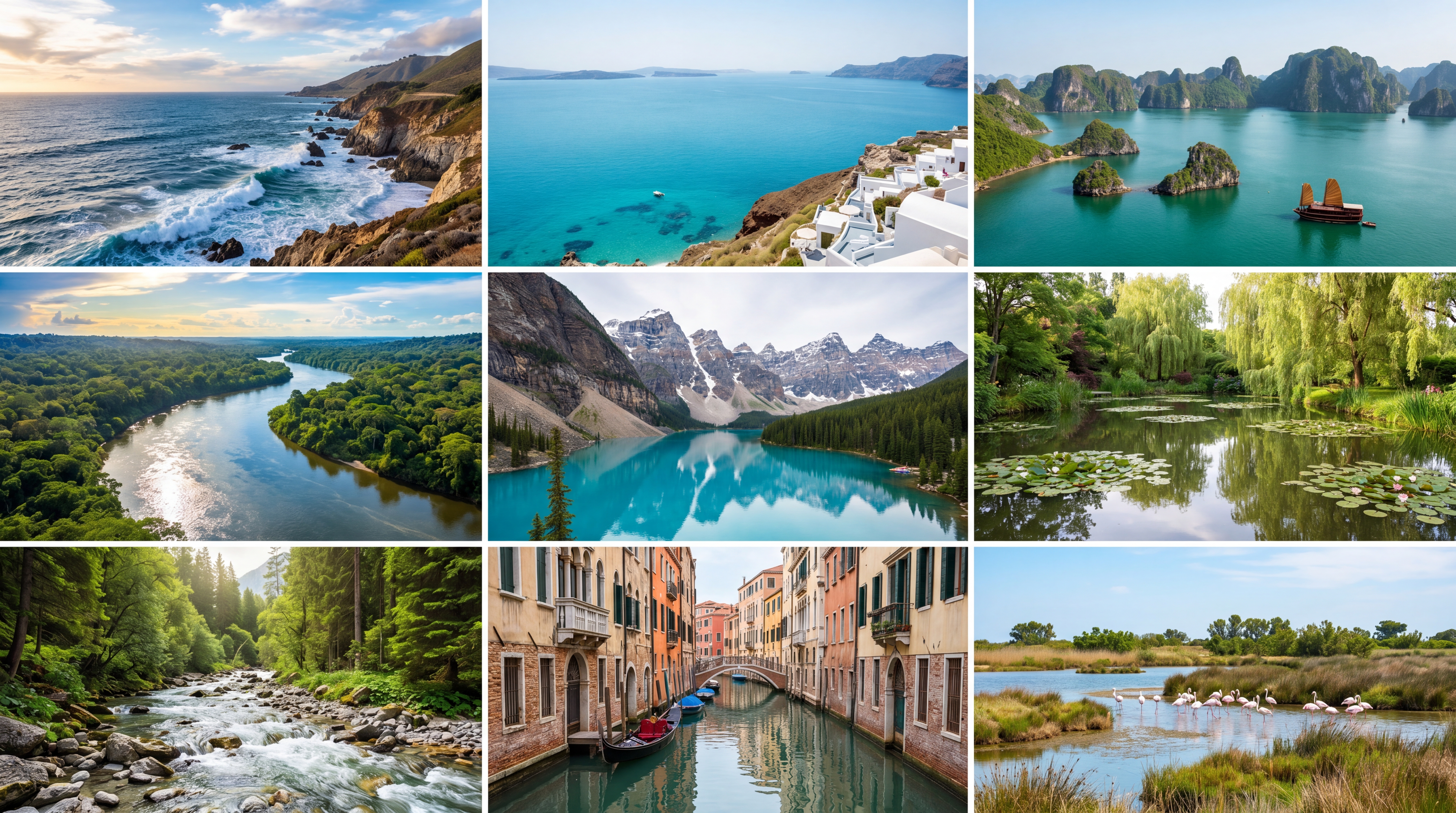
Bodies of water vocabulary helps English learners describe the natural world with more precision. Instead of using one general word like water, English gives us specific words for size, movement, location, shape, and purpose: ocean, sea, bay, gulf, river, stream, creek, lake, pond, lagoon, estuary, canal, reservoir, and wetland.
This vocabulary is useful for travel, geography, reading comprehension, environmental topics, real estate descriptions, news articles, school assignments, and everyday English conversation. Language learning is not only about memorizing words. It is also about understanding how words describe the world clearly.
Bodies of Water Vocabulary in English
A body of water is a natural or artificial area where water collects or flows. Some bodies of water are huge, like oceans. Others are small, like creeks and ponds. Some are natural, while others are built by people for transportation, storage, irrigation, or other uses.
Learning these words together helps you understand the differences between similar terms and use them with more confidence.
Ocean
An ocean is a very large, deep body of salt water that covers most of the Earth’s surface. Oceans are the largest bodies of water on Earth.
Example: The Pacific Ocean is the largest ocean in the world.
Sea
A sea is a body of saltwater that is smaller than an ocean and is often partly enclosed by land. Seas can be connected to oceans, but they are usually more geographically limited.
Example: The Mediterranean Sea is located between Europe, Africa, and Asia.
Bay
A bay is a broad, curved, recessed, coastal body of water that is smaller than a gulf. A bay is usually partly surrounded by land and opens into a larger body of water, such as a sea or ocean.
Example: The boats were anchored in the quiet bay.
Grammar Note: Coordinate Adjectives
In the phrase a broad, curved, recessed, coastal body of water, commas are used between broad, curved, and recessed because those adjectives work together to describe the shape of the bay. The word coastal describes location, so the commas help the sentence move clearly from shape to location.
Gulf
A gulf is a large, deeply recessed part of the sea that extends into land. A gulf is usually larger and more deeply indented than a bay.
Example: The Gulf of Mexico is bordered by the United States, Mexico, and Cuba.
Grammar Note: Describing Shape
In the phrase a large, deeply recessed part of the sea, a comma is used between large and deeply recessed because both descriptions help identify the noun part. The phrase sounds more precise and natural with the comma.
River
A river is a large, flowing body of water that moves toward an ocean, sea, lake, or another river. Rivers usually have a source, a path, and a mouth where the water flows into a larger body of water.
Example: The river flows through the valley before reaching the sea.
A river that flows through a cave or underground passage can be called a subterranean river.
Stream
A stream is a smaller, flowing body of water, often moving into a larger river. Streams are usually narrower than rivers.
Example: We followed the stream through the forest.
Creek
A creek is a small stream. In everyday English, especially in American English, the words creek and stream are often used interchangeably to describe small, flowing bodies of water.
Example: The children played near the creek behind the house.
Lake
A lake is a large, stationary body of water surrounded by land. Lakes can be natural or artificial, and they may contain freshwater or saltwater, depending on the location.
Example: They rented a cabin near the lake for the summer.
Pond
A pond is a smaller, shallow lake. Ponds are usually easier to see across than lakes and may support plants, fish, frogs, insects, and other wildlife.
Example: Ducks were swimming in the pond.
Lagoon
A lagoon is a shallow body of water separated from a larger body of water by a barrier, such as a reef, sandbar, or barrier island.
Example: The lagoon was protected from the open sea by a long sandbar.
Estuary
An estuary is a coastal area where freshwater from rivers or streams meets and mixes with saltwater from the sea or ocean. Estuaries are important ecosystems because they often support many forms of plant and animal life.
Example: The estuary is home to birds, fish, and wetland plants.
Canal
A canal is an artificial waterway engineered to connect different bodies of water or transport goods and people. Unlike rivers and streams, canals are built or heavily modified by humans.
Example: The canal allowed boats to travel between the two cities.
Reservoir
A reservoir is an artificial lake created to store water for various uses, such as drinking water, irrigation, energy production, or flood control.
Example: The reservoir supplies water to the nearby town.
Wetland
A wetland is an area where water covers the soil or is present near the surface. Wetlands may include swamps, marshes, and bogs.
Example: The wetland provides habitat for birds, insects, and amphibians.
Common Confusions: Similar Water Vocabulary
Many bodies of water sound similar because they share features. The key is to notice size, movement, saltwater versus freshwater, and whether the water is natural or artificial.
Bay vs. Gulf
A bay is usually smaller and less deeply recessed than a gulf. Both are coastal bodies of water partly surrounded by land, but a gulf is generally larger and extends more deeply into land.
Creek vs. Stream
A creek is usually a small stream. In many everyday conversations, creek and stream can mean almost the same thing, especially when describing small flowing water.
Lake vs. Pond
A lake is generally larger and deeper than a pond. A pond is usually smaller and shallower, though exact usage can vary by region.
River vs. Canal
A river is natural. A canal is artificial or engineered. Both can carry water from one place to another, but canals are created or controlled by people.
Lagoon vs. Estuary
A lagoon is a shallow body of water separated from a larger body of water by a natural barrier. An estuary is where freshwater and saltwater meet and mix near the coast.
Practice Sentences
Use these sentences to practice the vocabulary in context:
- The river flows into the ocean after passing through several towns.
- The lagoon is protected from the sea by a sandbar.
- The canal was built to help ships move goods inland.
- The wetland is full of marsh grasses and wildlife.
- The creek behind the house becomes wider after heavy rain.
- The bay has calm water because it is partly surrounded by land.
- The reservoir stores water for the city.
- The estuary is where river water mixes with ocean water.
Quick Vocabulary Review
- Ocean: a massive body of salt water covering much of Earth.
- Sea: a smaller saltwater body, often partly enclosed by land.
- Bay: a broad, curved coastal body of water smaller than a gulf.
- Gulf: a large, deeply recessed part of the sea extending into land.
- River: a large flowing body of water.
- Stream: a smaller flowing body of water.
- Creek: a small stream.
- Lake: a large stationary body of water surrounded by land.
- Pond: a smaller, shallow lake.
- Lagoon: a shallow body of water separated from a larger body by a barrier.
- Estuary: a coastal area where freshwater and saltwater mix.
- Canal: an artificial waterway.
- Reservoir: an artificial lake used to store water.
- Wetland: land where water covers or saturates the soil.
Why Precision Matters in English Vocabulary
Strong English vocabulary is not only about knowing more words. It is about choosing the right word for the situation. A stream is not exactly a river. A bay is not exactly a gulf. A pond is not exactly a lake. These differences help speakers describe the world with clarity and confidence.
For English learners, this kind of vocabulary builds stronger reading comprehension, better writing, and more precise speaking. It also helps learners understand geography, travel writing, environmental topics, real estate descriptions, and everyday conversation.
Learn English with Changing Crowns®
Changing Crowns® creates English learning resources designed to help learners understand real vocabulary, grammar, meaning, and usage in context. Instead of memorizing isolated word lists, learners can build practical English through stories, examples, explanations, and real-life language.
Explore English learning resources, articles, and lessons at changingcrowns.com.
Quick Summary
Bodies of water vocabulary includes words such as ocean, sea, bay, gulf, river, stream, creek, lake, pond, lagoon, estuary, canal, reservoir, and wetland. Learning the differences helps English learners describe nature, geography, travel, and the environment with more precision.